Digital markets and their structure
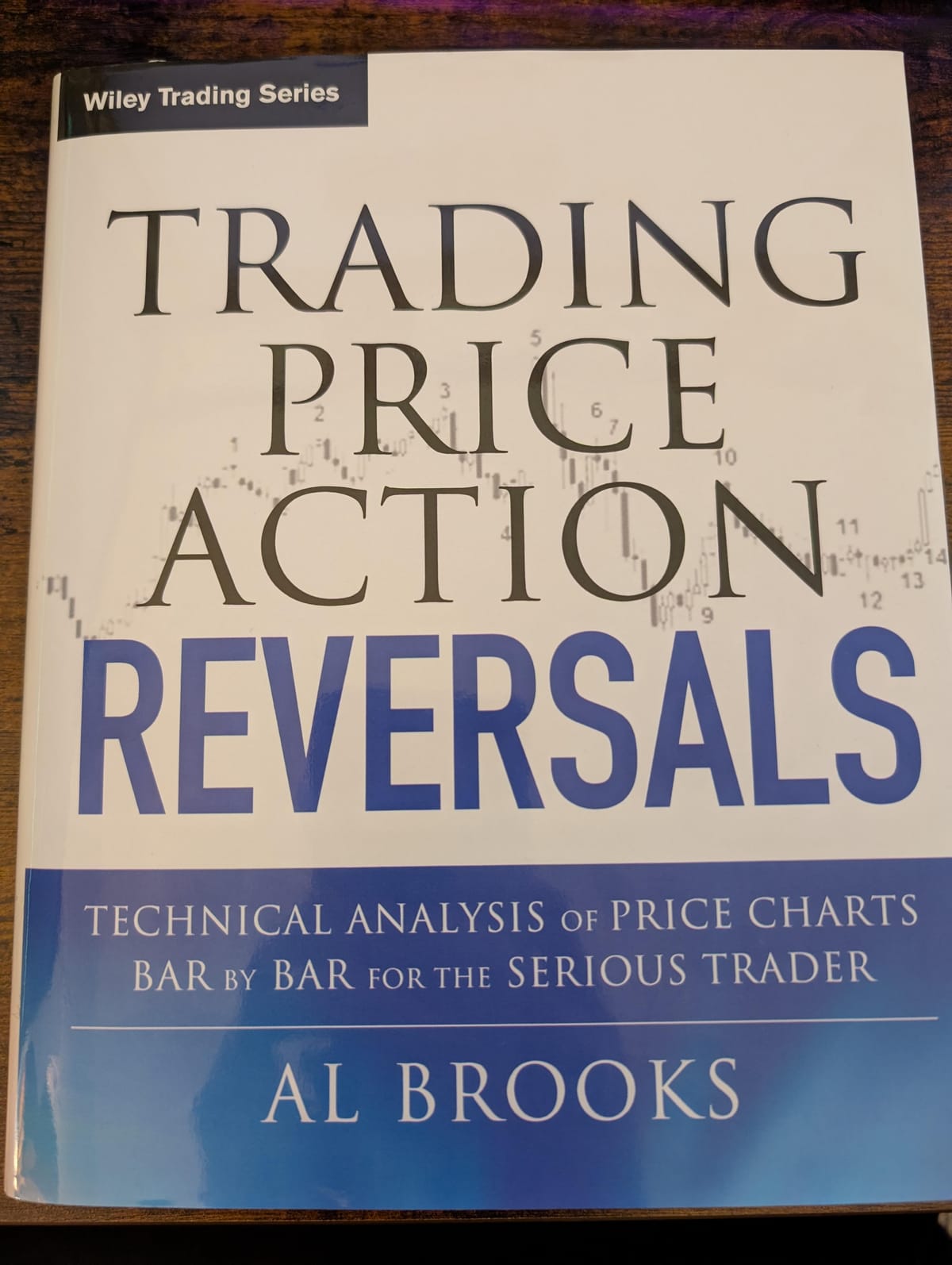
While drafting the inaugural entry on price action and the theory of market structure, I found myself thinking about how to organise a series of posts that introduce the technical and quantitative details. In the process, I realised there is a still a question of motivation. To satisfy this question, I turn to the introduction of Al Brooks' textbook Trading Price Action: Reversals. This is the third in a trilogy of textbooks by Brooks - the other two focus on trends and trading ranges. I like these textbooks so much that, if I were to teach an undergraduate course on market structure, they would be listed as primary references.
In the Introduction, Brooks describes some of the logic of market structure and the forces that define it (let’s stick to listed equities). He starts with a basic observation about markets: they’re quantitative objects. That is to say, mathematically, markets exist in a sort of probability space, and, although price action contains a degree of unpredictability, it is not random in the same sense as a coin flip. Price action may be hard to predict, but markets and their price charts are not merely random lines. This is because prices do not represent “pure noise” in the sense of being unconstrained, and price changes are not arbitrary - they’re the observable output of an order-driven process, and their behaviour can be studied statistically and modelled quantitatively (even if predictability is limited, especially at short horizons). In this sense, I think there is a nice analogy to be drawn: markets can resemble physical systems where micro-level uncertainty aggregates into macro-level regularities. The path is noisy, but the process isn’t structureless.
Think of it this way: price charts represent a database of transactions. Since most trading is institutional, with retail representing roughly a fifth to a third of U.S. equity volume (depending on the measurement and period), markets generally represent the transactions of a large collection of institutions. Since a large fraction of risk transfer and liquidity demand is institutional, it follows that institutional constraints and behaviour strongly shape intraday structure (even though retail flow can still be price relevant, especially in certain names and volatility regimes). This means that most price charts are organised according to institutional volume. (Even with the increase in retail traders and retail trading volume - especially since 2019 and the zero commissions shift - by and large institutions are the market, and the institutions generate the primary forces that move the market).
This is why, as Brooks notes, in most situations the presence of institutional gravity is unavoidable. Small volume trades of the average retail day trader only take place, and succeed, if an institution is willing to take the same trade. In other words, every single trade that a retail trader makes will likely involve at least one institution willing to take one side or another. Technically, this is due to how a retail trade gets filled when some liquidity provider takes the other side, with retail participation expressed through the prices liquidity providers are willing to show, and through how they hedge and re-risk elsewhere. Similarly, price levels are tested, and retested, when enough liquidity demand meets enough displayed (or hidden) supply - often involving institutional liquidity providers and institutional risk transfer.
For this reason, and others, the identification that institutions are the market might be taken as a key axiom. Heuristically, this is often expressed, as Brooks highlights, through the sentiment that "the institutions are the smart money". Indeed, the relative strength or relative weakness of a symbol's intraday chart would seem to correlate directly with institutional influence (a topic for a future post). At the end of the day, the final print out of the day's charts describe the bulk of institutional money, and whether it was biased in the direction of buying or selling, which, in itself, reveals a lot about the structure of markets.
In addition to the institutional axiom, I think another important axiom about market structure is simply that most trading within modern electronic markets is done algorithmically, and hence by computers. Algorithmic trading also coincides with other modern phenomena such as high-frequency trading and, increasingly, data-science driven approaches. In practise, institutions that generate the transactions that dictate the price patterns of most markets, do so via programmes that have been developed to instantly analyse economic and market data and execute trades based on that analysis. It is very common for institutions to trade enormous volumes based on statistical analysis of price action. Combining all institutional methods, computer-driven trading now accounts for more than 70% of a single day's volume, as noted by Brooks (this number varies depending on the study, but it is broadly accurate) and many others.
Since trading is increasingly automated, this means more of the market’s behaviour is generated by very strict rule-based systems operating under explicit logical constraints. To phrase it more intuitively: since computers are very good at decision making, and since programmes use objective mathematical analysis, modern digital markets tend to take on a logical structure. This, it can be said, is the basis for the theory of market structure, at least as I understand it. To give one overly simplistic example: one will notice that on the majority of intraday charts, supply and demand zones - i.e., support and resistance zones -are regularly defined. Supply and demand zones coincide with liquidity concentrations: price regions where resting interest accumulates, where execution algorithms slow down or speed up, and where dealers and market makers manage inventory risk. Thus, measured and calculated moves may be projected based on the existence of these zones and the volume that follows from simple statistical modelling.
Other recurring patterns - ranges, trends, breakouts, imbalances - that also give a market its structure, exists due to similarly repeatable statistical regularities. In a sense, these empirical and observable phenomena are the visible footprint of order flow interacting with available liquidity. The point isn’t that humans have disappeared - rather that human objectives and constraints are increasingly expressed through automated execution and systematic risk-taking - which is exactly why a micro- and macro-structure lens is so useful.
So, if markets do have structure, how does one account for the undeniable uncertainty about price action and overall market behaviour? We discussed this in the last post. Structure doesn’t eliminate complexity - it coexists with it. Just because something is complex and multi-variable does not mean it is not organised or have structure. There are many examples of such highly complex yet organised systems in physics. In market contexts, information arrival is stochastic; liquidity needs are time-varying; participants compete; and impact itself is nonlinear. This means that, in highly electronic markets, predictability is usually conditional, small, and capacity-limited, and much of what persists reflects frictions and constraints rather than free, stable patterns. In other words, patterns exist because, in an efficient market, the controlling volume is based on a structuring mathematical logic.
Automation and algorithmic trading doesn’t guarantee “better decisions,” but it does make the market’s mechanics more measurable. Scientifically, this is very interesting for obvious reasons. At the same time, due to the nature of competing forces, price action will always contain some degree of uncertainty. But the more that digital markets become computerised, and the more quantitative trading becomes consistent, efficient, and predictive, irrational and emotional human behaviour becomes increasingly insignificant for markets and their charts. Although Brooks does not lean into quantitative trading nearly enough, and, instead, emphasises the importance of analysing charts; it is undeniable that, as market trading becomes increasingly quantitative, shifting from a model driven by human intuition to one dominated by algorithms, big data, and machine learning, mathematical and statistical methodologies will be essential for the theory of markets and its participants.
I think this overall observation can, and should, be taken as another key axiom for studying modern markets. With AI being increasingly used to analyse vast, unstructured data; high-frequency trading used to execute trades in microseconds; and with the rise of data-science driven decision making along with automation and its speed of execution; current quantitative approaches to understanding markets, and quant strategies, based on liquidity, reduced bid-ask spreads, and improved market efficiency, are just the beginning of a shifting 21st century financial landscape.
Hopefully these extra comments provide some more context and motivation for why micro- and macro-structure theory of markets is methodologically interesting. In the next posts, we'll start getting into the details of market structure in the context of intraday charts, focusing firstly on the simple idea of supply and demand.