Price action and the microstructure theory of markets
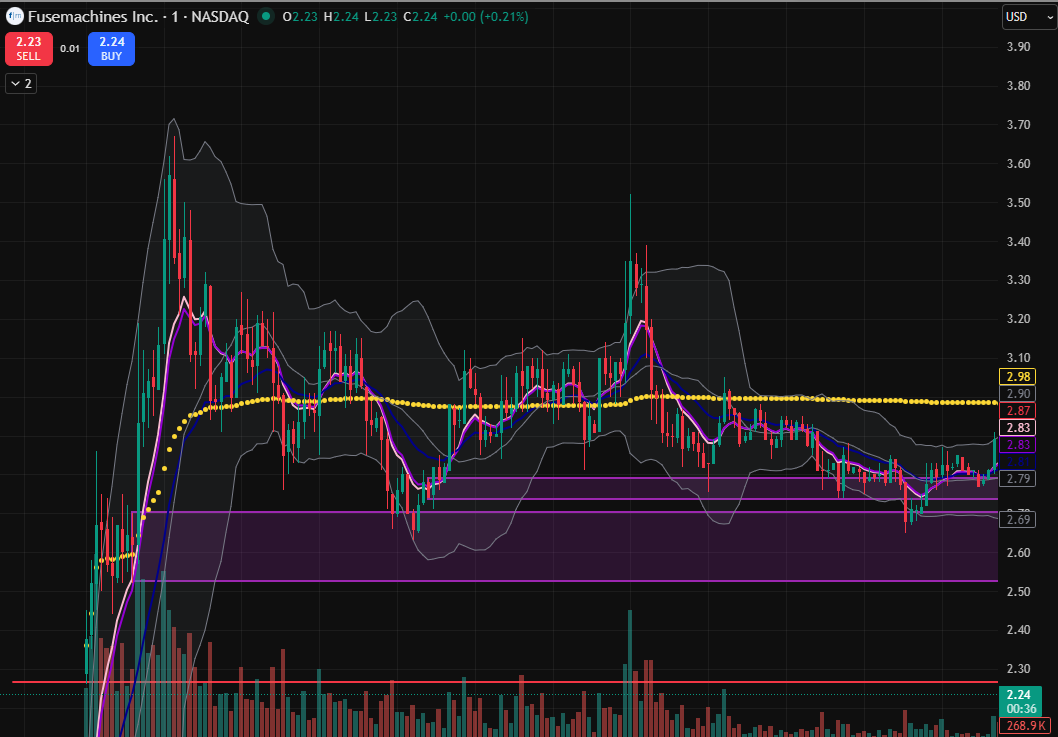
I find financial markets fascinating, not only as a venue for trading but also as a source of rich statistical structure.
Whilst price action may at first seem random, with explanation as to the behaviour of price charts appearing subjective, price action is not “random” in a coin-flip sense. Its chaotic appearance is owed to the nature of its complexity. This complexity emerges from the interaction of many agents, constraints, and exogenous events, driven by countless interacting decisions (both rational and irrational). Mathematically, the complexity of markets motivates stochastic descriptions of its dynamics, especially when key drivers are unobserved, heterogeneous, or only partially measurable.
Stochastic modelling is especially useful in contexts where can one, at best, make probability forecasts about outcomes when there are many random variables or factors. In market modelling, “random variables” usually means treating various factors driven market behaviour probabilistically. As in weather forecasting - where underlying dynamics are largely deterministic but uncertainty in initial conditions and model error lead naturally to probabilistic predictions - market models often represent uncertainty explicitly. Rather than producing a single-point forecast, stochastic modelling yields a distribution over possible outcomes and associated likelihoods, which is directly relevant for risk-aware decision-making required for day trading.
This is why, on a quantitative research level, when analysing financial markets stochastic modelling offers a set of mathematical tools that may be used to navigate uncertainty and, furthermore, calculate a range of possibilities and probabilities. Simply and reductively put, this is the name of the game.
At the level of quantitative research, stochastic modelling provides a mathematical framework for representing uncertainty and for making distributional statements (e.g., estimating the likelihood of outcomes under explicit assumptions). The goal is not a single “correct” forecast, but a calibrated way to reason about variability and risk. The theory of market microstructure provides a concrete example. At very short horizons, a major source of unpredictability is order flow and the mechanics of execution: bid–ask spreads, discrete pricing, queue priority, and price impact can all translate trading decisions into noisy realised price changes. By treating prices (or returns) as a stochastic process, one can ask what can be inferred in distribution: model increments as random variables, estimate their distribution from data, and reason about expected outcomes and risk.
We’ll unpack what stochastic modelling means in the context of financial markets - and discuss some of the underlying mathematics - in a future post (for readers interested in the more technical side). For now, the key idea is simple: it’s the seemingly random changes in prices and volatility that have motivated the extensive use of stochastic processes in finance.
For the average retail day trader, stochastic modelling is not a prerequisite. However, it can be useful at a higher level as an explanatory lens: markets exhibit day-to-day noise, but they also experience shocks and sudden shifts whose timing and magnitudes are themselves uncertain. In an informal sense, and perhaps metaphorically, one could even argue that markets often appear “doubly stochastic”, since, in addition to day-to-day noise there is external influence, with its own parameters and constraints. Taking a macro viewpoint to understand why markets behave as they do, can be valuable even when focused on the sort of distilled microscopic, or local, behaviour of price action on intraday charts.
If we accept a stochastic description, what makes markets especially interesting is that they can still exhibit conditional structure. Even if day-to-day price changes are uncertain - now emphasising the level of uncertainty for the retail day trader - market behaviour exhibits conditional dependence and a degree of predictability in distribution. That is to say, in the midst of the complexity of markets there is an emergence of regular and repeatable patterns. Under certain conditions, these repeatable patterns are observed across timeframes - trending behaviour, level-to-level reactions often described as “support/resistance”, or, what we'll often refer to as “supply/demand zones,” as well as things like mean reversion. In this context, some aspects of price action can be predictable in a statistical/conditional sense. Generally speaking, this is what defines the notion of having an edge.
How should we make sense of patterns that can look so regular that many trading texts treat them as primitives? One useful framing is to treat predictability as conditional dependence: outcomes are not independent of prior states, regimes, or constraints. Whilst markets are uncertain, patterns exist. And this, I would say, is precisely why I find studying markets to be so fascinating: the conditional distribution of future prices/returns given an informational set. For that, I find the theory of market micro- and macro-structure extremely helpful. It is a natural place to look for mechanisms that generate conditional structure in price action, their mathematical roots, and for trying to understand (and quantify) these regularities. In a nutshell, studying the theory of micro- and macro-structure of markets, particularly in the context of intraday charts, is one of the main aims of this blog.